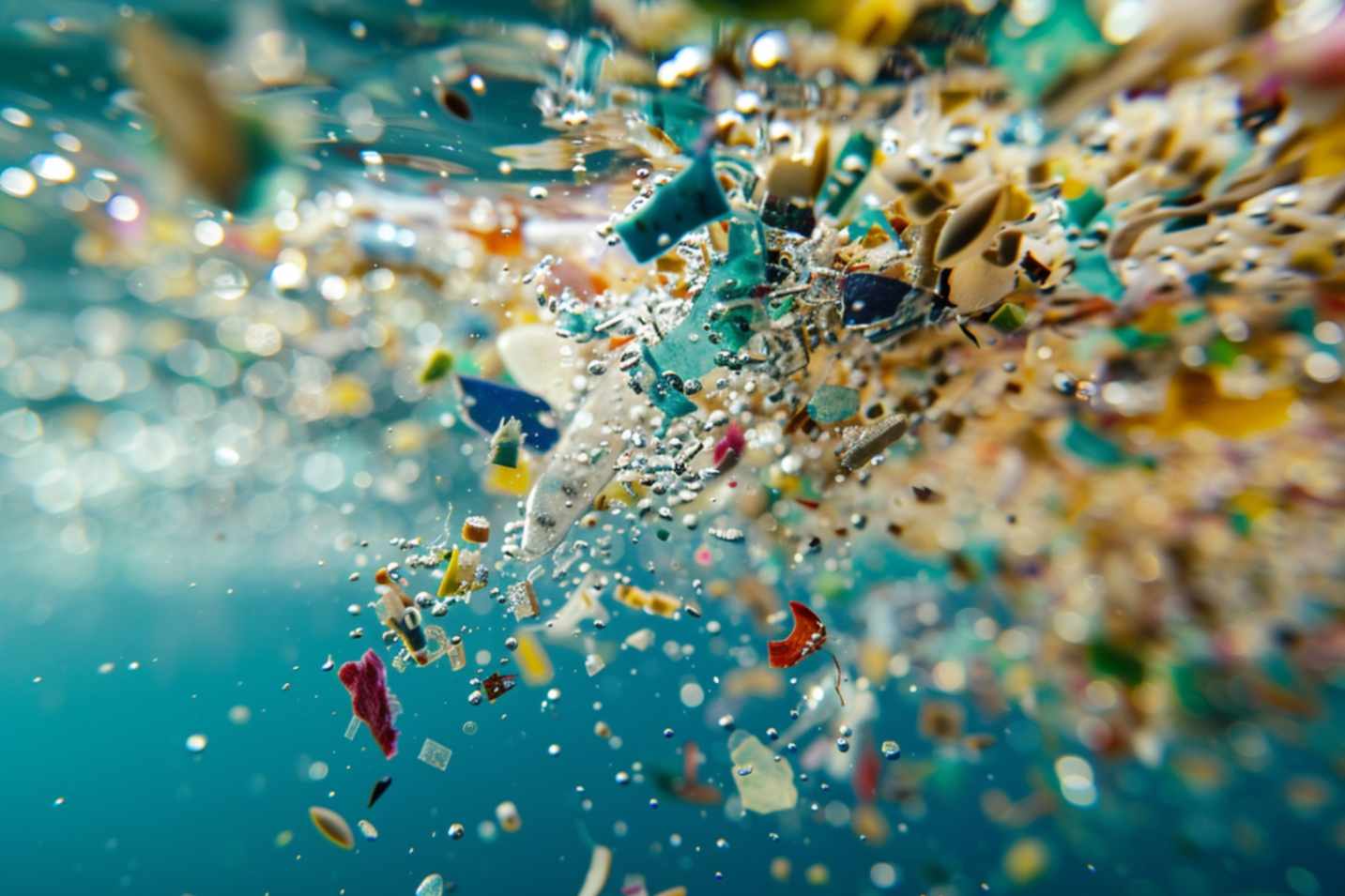
Following Earth Day, conversations around sustainability often focus on reducing plastic waste and protecting natural resources. Increasingly, another concern is entering the spotlight: microplastics. Once considered a niche scientific issue, microplastics are now recognized as a widespread environmental and public health challenge that are found not only in oceans and soil, but also in the air we breathe, the food we eat, and the water we drink.
Understanding where microplastics come from and how to reduce exposure is becoming an essential part of making informed choices about everyday hydration,and the iSpring Water System offers a reliable solution for safer, cleaner water.
Understanding Microplastics
Microplastics are plastic particles smaller than 5 millimeters in length, roughly the size of a grain of rice. Even more concerning are nanoplastics, which measure less than 100 nanometers and can more easily penetrate biological tissues.
In bottled water, microplastics can be introduced at multiple stages, including manufacturing, packaging, storage, and transportation. Even sealed bottles are not immune. Tiny plastic particles can shed from the bottle itself or its cap. As plastic packaging continues to dominate the beverage industry, the likelihood of contamination remains high.
Beyond bottled water, microplastics have become common in the environment, entering water supplies through the breakdown of larger plastic waste and industrial processes.

Health and Environmental Risks
Research into the health effects of microplastics is ongoing, but early findings suggest cause for concern. These particles can enter the human body through ingestion and may accumulate over time in the digestive system, bloodstream, and potentially other organs. Their small size raises questions about long-term exposure and the body’s ability to eliminate them.

The environmental impact is equally significant. Microplastics pollute rivers, lakes, and oceans, where they are ingested by wildlife and enter the food chain. Over time, this contamination disrupts ecosystems and contributes to the broader issue of plastic pollution.

Reducing Microplastics in Drinking Water
One of the most effective ways to reduce exposure to microplastics is to limit reliance on bottled water. Transitioning to a home water filtration system provides a more controlled and sustainable alternative.
Reverse osmosis (RO) technology is particularly effective in addressing this issue. RO membranes feature pores as small as 0.0001 microns, significantly smaller than microplastic particles, allowing them to filter out not only microplastics but also heavy metals, chlorine, and other common contaminants. The result is consistently clean, safe drinking water delivered directly from the tap.
Practical Filtration Solutions from iSpring Water Systems
iSpring offers a range of filtration systems designed to meet different household needs while addressing concerns about water quality and sustainability:
- RCC7AK-UV is our under-sink RO system that combines multi-stage filtration with UV sterilization, offering an added layer of protection against microorganisms alongside effective contaminant removal, while enhancing water taste and balancing pH. It is well-suited for households seeking comprehensive water purification.
- RO5004F is a tankless RO system designed for modern kitchens. The RO5004F features a space-saving design, fast water flow, and reduced wastewater. Its efficiency and convenience make it a strong choice for families prioritizing both performance and sustainability.
- RCD100HCG is our countertop RO system that is plug-and-play and provides hot, cold, and alkaline water, making it ideal for renters or those seeking portability. Despite its compact design, it delivers high-quality filtration comparable to larger systems.
Each of these systems reflects iSpring’s focus on user-friendly design and advanced filtration performance, helping households reduce reliance on bottled water while improving water quality.

Take Action for Your Health and the Planet
Microplastics in bottled water pose a real risk for both human health and the environment. Reducing exposure starts with practical, everyday decisions such as choosing a reliable home water filtration system over single-use bottled water.
iSpring Water Systems offers solutions that support safer hydration while also reducing plastic waste. In recognition of Earth Day, iSpring is making this transition more accessible with a Spring Sale & Earth Day Special from April 13 to 26, offering 15% off sitewide, making it easier to adopt home filtration and to support sustainable hydration.
As awareness of microplastics continues to grow, taking steps to improve water quality at home is a meaningful way to protect both personal health and the environment, one glass at a time. Celebrate World Earth Day by switching to iSpring filtration systems to reduce plastic waste and protect water resources.


