

As living standards continue to rise, more households are turning to water filtration systems to ensure clean, safe, and great-tasting water. Whether it’s for drinking, cooking, bathing, or cleaning, filtered water has become an essential part of modern home life. But while many people invest in high-quality filtration systems, one critical aspect is often overlooked: regular filter replacement.
Unlike most household appliances that can run for years with minimal attention, water filters require consistent maintenance to perform effectively. Over time, filters become saturated with contaminants, reducing their ability to purify water and potentially impacting both water quality and system performance.
Understanding when to replace your water filter isn’t just about maintaining taste. It’s about protecting your health, preserving your equipment, and ensuring your system operates at peak efficiency. It’s crucial to understand recommended replacement cycles and the different filter types as well as how to keep your system running smoothly.
Standard Filter Replacement Cycles
Every water filtration system is designed with specific replacement timelines in mind. Manufacturers provide recommended schedules based on average usage and typical water conditions, giving homeowners a reliable starting point for maintenance.
Modern systems often include smart filter replacement reminders. These alerts take the guesswork out of maintenance by notifying you when a filter has reached the end of its lifespan.
However, it’s important to recognize that these recommendations are not one-size-fits-all. Several household factors can influence how often filters should be replaced:
- Family size: More people mean higher water usage and faster filter saturation.
- Water quality: Homes with hard water or higher contaminant levels may require more frequent replacements.
- Usage habits: Frequent cooking, drinking, or appliance use increases demand on the system.
For this reason, think of manufacturer guidelines as a baseline, and consider the above to guide your actual replacement timing.
Understanding Filter Types and Replacement Cycles
Spin Down Filter: The First Line of Defense
Pre-filters play a crucial role in a whole house water filter system. Typically installed just after the water meter, they act as the first barrier against contaminants entering your home.
Unlike more advanced filters, pre-filters are usually made from stainless steel mesh and are designed to capture larger particles such as sediment, rust, and debris. Their purpose is not to purify water at a microscopic level, but rather to protect downstream filtration systems.
One of the key advantages of pre-filters is their low maintenance requirement. Instead of needing replacement, they simply require regular rinsing to remove accumulated debris. This makes them both cost-effective and environmentally friendly.
Pre-filters are just the first step in this chain, preparing water for the subsequent filters to perform at their best.
To help plan maintenance, here’s a general guide to common filter types and typical lifespans, ensuring optimal water quality and system performance.
Common Filter Types & Typical Lifespans
A water filtration system often consists of multiple stages, each designed to target specific types of contaminants. While replacement schedules vary by product and manufacturer, using the table below as a general guideline can help you understand what to expect and ensure optimal water quality and system performance are met.
| Model | Image | Replacement Filters | Life Cycle |
|---|---|---|---|
| REVERSE OSMOSIS SYSTEMS |

|
PP Sediment | 6-12 Months |
| GAC | 6-12 Months | ||
| CTO | 6-12 Months | ||
| RO Membrane | 1-3 Years | ||
| Fine Carbon | 12 Months | ||
| Alkaline | 6-12 Months | ||
| Deionization | 6-12 Months | ||
| UV Lamp | 12 Months | ||
| WHOLE HOUSE SYSTEMS |
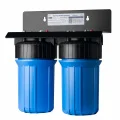 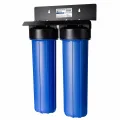 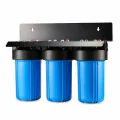 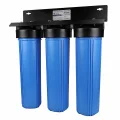 
|
PP Sediment 4.5" x 10" / 4.5" x 20" / 20" x 2.5" |
Up to 50,000 Gallons (6 Months) Up to 100,000 Gallons (12 Months) Up to 30,000 Gallons (6 Months) |
| Carbon Block 4.5" x 10" / 4.5" x 20" / 20" x 2.5" |
Up to 50,000 Gallons (6 Months) Up to 100,000 Gallons (12 Months) Up to 30,000 Gallons (6 Months) |
||
| GAC + KDF 4.5" x 10" / 4.5" x 20" / 20" x 2.5" |
Up to 80,000 Gallons (6 Months) Up to 150,000 Gallons (12 Months) Up to 30,000 Gallons (6 Months) |
||
| Fe & Mn Reducing 4.5" x 10" / 4.5" x 20" |
Up to 30,000 Gallons at 3.0 ppm Iron Level 50,000 Gallons at 3.0 ppm Iron Level |
||
| Pb Reducing 4.5" x 10" / 4.5" x 20" |
Up to 80,000 Gallons at 100 ppb Lead Level 150,000 Gallons at 100 ppb Lead Level |
||
| Anti Scale 4.5" x 10" / 4.5" x 20" |
Up to 80,000 Gallons (6 Months) Up to 250,000 Gallons (12 Months) |
||
| PFAS Removal 4.5" x 10" / 4.5" x 20" |
Up to 100,000 Gallons Up to 50,000 Gallons |
||
| Lead Removal 4.5" x 10" / 4.5" x 20" |
Up to 100,000 Gallons Up to 50,000 Gallons |
||
| Chloramine Removal4.5" x 10" /4.5” x 20” |
Up to 100,000 Gallons Up to 50,000 Gallons |
Other Ways to Know It’s Time to Replace a Filter
Even with recommended schedules and smart alerts, your system may show physical signs that a filter needs replacing. Paying attention to these indicators can help you avoid a drop in water quality.
Changes in taste or odor are often the first noticeable signs. If your water starts to taste metallic, bitter, or develops an unusual smell, it may indicate that the filter is no longer effectively removing contaminants.
Reduced water flow is another common signal. When filters become clogged with particles, they restrict water movement.
As a general rule, if your household experiences high water usage or poor source water quality, it’s wise to shorten replacement intervals. Even if no obvious signs are present, filters should always be replaced within the manufacturer’s maximum recommended timeframe.
Risks of Not Replacing Filters on Time

Delaying filter replacement can have more serious consequences than many homeowners realize. While it may seem harmless in the short term, neglected filters can compromise both your system and your health.
Loss of Filtration Efficiency
One of the biggest risks is loss of filtration efficiency. Once a filter is saturated, it can no longer effectively remove contaminants, and in some cases, it may even begin to release trapped particles back into the water.
Overloading Downstream Filters
Another issue is overloading downstream filters. When earlier stages fail, excess contaminants pass through to later filters, causing them to wear out more quickly and reducing the overall lifespan of the system.
Potential System Failure and Health Risks
Over time, this strain can lead to premature system failure, resulting in costly repairs or replacements. Even more concerning are the potential health risks, as ineffective filtration may allow harmful substances such as heavy metals, bacteria, or chemicals to enter your drinking water.
Practical Tips for Maintaining Your Water Filter
Keeping your water filtration system in top condition doesn’t have to be complicated. With a few simple habits, you can extend the life of your system and ensure consistently clean water.
Start by tracking your filter replacement dates. Whether you use a calendar, phone reminder, or app, staying organized helps prevent missed maintenance.
For added convenience, iSpring offers automatic filter life trackers:
- AFLT3: Tracks up to three filters in whole house or under-sink systems, with reminders for up to 12 months. Broad compatibility includes iSpring WGB, WCB, US31, CW series, and more.
- AFLT4: Designed for RCC and RCCP reverse osmosis systems, supporting filter life cycles from 3 to 24 months.
Using these tools ensures timely filter changes, maintaining optimal performance and consistently delivering clean, safe, and great-tasting water throughout your home.
Always use manufacturer-recommended replacement filters. While generic options may seem cost-effective, they can compromise compatibility, performance, and even system integrity.
Make it a habit to monitor your water’s taste, clarity, and flow rate. Small changes can provide early warnings before bigger issues arise.
If your system includes smart features, rely on built-in alerts to guide your maintenance schedule.
Finally, don’t forget about your pre-filter. Regular rinsing can significantly extend the lifespan of your entire filtration system.
Don’t Wait: Protect Your Water, Protect Your Home
Replacing your filter on time is one of the simplest yet most important steps you can take for your water filtration system. Clean water isn’t just about convenience. It’s about ensuring your family has access to safe, high-quality water every day.
By understanding your system, monitoring usage, and following recommended replacement schedules, you can maintain optimal performance and extend the life of your investment.
Check your current filters, assess their condition, and replace them if needed. And if you’re looking to upgrade or maintain your system, explore a wide range of high-quality water filtration system and iSpring water filter replacement cartridges designed to keep your water clean, fresh, and reliable.

